He published a book called ‘S/Z’ in 1970. It focused on analyzing a short story by Balzac. Barthes goes through the story denoting where and how different codes of meaning function. In the book, he argues that every narrative is interwoven with multiple codes:
HERMENEUTIC/ENIGMA CODE: This code refers to any element of a text that is not fully explained ; this becomes a mystery to the audience. This is to keep the audience guessing until the mystery is finally revealed in the finale of a text. A mystery makes the audience want to know more, which keeps them watching.
PROAIRETIC/ACTION CODE: The Proairetic Code builds tension. Action or events are used to indicate something else is going to happen, meaning the audience attempt to guess what will happen next. The Hermeneutic and Proairetic Codes work together to develop the tension, putting the audience on edge and wanting to watch more.
SEMANTIC CODE: This code refers to parts of a text that refer to additional meanings. These elements of semantic codes have a connotative function in the text and add an extra layer of meaning in addition to literal meaning.
SYMBOLIC CODE: Similar to the Semantic code, this code creates semantic meanings through symbolism. It uses opposites to portray contrast and create deeper meaning. This creates tension, drama and character development
REFERENTIAL CODE: This code refers to anything within a text which refers to an external body of knowledge , e.g. scientific, historical or cultural knowledge.
For my film analysis and film opening, I would focus mainly on enigma code but while searching for enigma codes, I researched what other codes are used.
Any kind of media is made for some kind of audience to consume, and in order to know what kind of audience is going to consume my media, it is necessary to conduct a survey.
87.50% of my respondents were female while only 12.50% of the respondents were male, meaning I knew more female would be watching my story opening rather than male.
Question 2
Most of my correspondents were in the 18-24 age range, 82.50% to be exact, so I knew that almost all of my audience would be late-teenagers to young-adults.
Question 3
The next question was how often do you watch movies? and the most closest were A couple times a month or monthly, at 35% and 32.50%, meaning people don’t watch movies very often. The film should be made in order for the viewer to feel it was worth it.
Question 4
The most watched genre was Thriller, at 47.50%, which means I would be making something close to thriller. The second place was Horror, at 17.50%, and the third being close to the second, being Comedy, at 15%, which would have been my second option and I would be able to explore more if I were to make a whole feature film.
Question 5
The most characters the people wanted were not mentioned, so all of the main characters which takes the whole story forward came in 52.50%, and the second being 3-4, at 27.50%, which also works in my favour, because I don’t have that less or that many characters in my film opening.
The most common was Story in the film opening, at 40%, which really helped me to focus on my story rather than cinematics.
Question 7
The most answered was online, at 67.50%, which makes sense because people tend to watch everything in the comfort of their home.
Question 8
The last question’s most common answer was through social media, at 75%, meaning most of my audience would be getting their news about the film through social media.
Conducting this has helped me understand my audience a lot, and would definitely help me while making my film opening.
My main reason to choose this movie was to show how a great story can be portrayed even with a language barrier, this movie is so symbolic, with so much meaning behind every single shot, prop, and every character, that it requires more than one watch. The genre was also what intrigued me, thriller and dark comedy, which it stays true to it’s words.
Titles
The titles are simple and shows the production house and the title of the movie, with minimal colour and just getting the names out out there.
Introduction of Characters
4th character
3rd character
2nd character
1st character
The filmmakers used a convention first by using the method of foreshadowing, where they gave the audience the order where the characters actually causes the conflict and how they affect the upcoming family.
Action and Events
The key, from the very start, is the use of light. Through out the whole film, the light represents hope, and the whole family being in a semi-basement and not fully underground represents how they still have hope of coming. The basement, with everything packed and congested, conveys the meaning of how bad the living situation is for the family. The main concern that we see the family having is not having the access to the internet. The simple use of Wi-Fi, is portrayed as a luxury which the family cannot afford.
The symbolism, like mentioned before, is shown from the starting by the mother asking what’s your plan and then the camera cutting to the medal and photo of the mother, where it is shown how the mother came in second which cancelled her plan A and now she was stuck with her second plan.
The son, in hopes of founding the internet, gets to every corner of the house and finally gets the internet in the bathroom. The toilet, which is placed higher that the family, also enhances the family’s situation, how the world and even the toilet is physically above them.
The fumigation process is what explains the title of the movie, parasite, and establishes it in the opening sequence how all of them cough and get affected except for the father, who keeps focused on making the boxes, indicating how the fumigation affected all the other members (of the family/parasites) except for one. This is hinted in the next scene when the manager from the pizza place says how 1 out 4 boxes is a reject. This whole scene explains itself in the end but it foreshadows the future of the family, yet using the same convention.
The whole family then tries to talk their way out of the paycheck that was deduced, and tries to take the job of an employee, manipulating the manager, hence playing the role of a parasite.
The difference in the surrounding , even between the neighbourhood and the house, is differentiated by using light, using blue and cool tone for outside world, while using dark and warm tones for the house, creating a boundary.
Night falls and Min, a friend of the son shows up, and is differentiated not only by his whole attire, but also how they physically and symbolically look up to him. The gift Min brought with him, which turns out to be fake, clearly represents how the opportunities he brought with him is also not good for the family. The character saying how it is metaphorical is also for the audience, to know it must be a symbol and not something genuine.
The whole exchange between Min and Ki-woo (the son) also establishes how Min looks down on the family as he feels less threatened on giving the job to Ki-woo then any other guy, as Ki-woo would not be able to compete against him, hence Min being safe.
Something which I took a notice of throughout the whole sequence was that the main characters look usually up when shown, but are shown to tower over the manager when manipulating her. They effect when they are together, just like parasites, and the father is shown from a high angle, hence shown alone and kind of helpless.
The reason why I chose to do an analysis on this particular movie is because it actually uses symbolism the right way. Without spoiling the movie, the filmmakers tell the whole idea of the movie in the sequence. This is what really intrigued me, how the use of light and symbols were used to convey a movie in such a order. It did not look like it was rushing or trying to convey a message forcibly, it did all of the work subtly, which asks the audience to view the movie more then once, and noticing something new every time.
The whole opening sequences how manipulating the main characters are, and we somehow feel sympathy considering they also feed off as parasite from the lady above them, by taking the advantage of the internet. We sympathize with the characters because the sequence establishes the concept that if the family is poor, it can do in order to live a better life. The whole sequence, if compared to the rest of the movie, plays a parallel part, and views the differences between the upper class and the lower class.
Genre
The film has the genres Comedy, Drama, Mystery, Thriller, Dark Comedy.
These genres itself intrigued me because I have not seen many movies where the genre Thriller and Comedy mix up very well. But the film makers made sure to not overdo both and kept a very clean and clear story which does not makes the audience confused. The genres are both shown very subtly, with the comedy not being overwhelming and the thriller also shown subtly. This film goes dark real soon real fast, with the first half being almost comedic and the second taking a full 360 turn. If we talk about the film opening itself, we are only introduced to the drama part of the film.
Theme and Topics
The main theme, which I got, is the visible difference between the upper and lower class. The film demonstrates poverty, desperation, and inequality; it dramatizes the extreme differences in the worlds between wealthy and poor families. The opening itself shows the lower class in a poor condition and how they try to make their way up by trying to take someone else’s job. Min also gives his job to his friend on the basis (which seems clear once the meaning behind dialogues are focused a little more) that his university friends might try to hit on the girl he tutors and likes, but Ki-Woo (the son) would not do such thing because he does not looks at him the way he looks at his University friends, in other words, he looks down and Ki-Woo and does not think he will be able to win the girl over. The difference gets clearer and clearer and we realize that the metaphor parasites is used for both parties.
Sound
The only time music is used is at the start of the film, with the diegetic sounds and non-diegetic sounds mixing with each other. The rest of the film opening follows silence and dialogues only with the occasional background noise. In the semi-underground house of the poor Kim family, there’s a lot of interference from outside noise flowing into the interior, designed with a number of Korean-style ambience sounds, including the sound of cars passing by the alley, the sound of neighborhood people, the sound of street vendors, piano practice, barking dogs, and the sound of cats, all of these emphasizes yet again on the situation which the family currently lives in. All this makes sense as the film goes on, but all these small details are what makes the audience realize what the film makers actually did as they watch the film.
Enigma Code
The main question the audience gets in their minds is how do they actually change their situation. What the film maker actually shows is the subtle and major difference between the classes living in this communist world and how the people leach off of each other to survive. Although the question of what happens is not intense at the start, the unsettling feeling increases as the movie progresses. What makes it interesting is the use of symbolism and how the audience who views the movie again gets what various dialogues and actions actually meant which makes the audience part of something and the ones who watches it the first time also are left in a daze as everything they’ve seen finally clicks. The movie itself is not complicated to understand, but it has a depth to it only those understand who really want to understand.
And all of this concludes my third and last film opening analysis.
What is a character? In fiction, a character (sometimes known as a fictional character) is a person or other being in a narrative (such as a novel, play, television series, film, or video game). They also can be divided into protagonist and antagonist.
A protagonist is the main character of a story. The protagonist is at the center of the story, makes the key decisions, and experiences the consequences of those decisions. The protagonist is the primary agent propelling the story forward, and is often the character who faces the most significant obstacles.
An antagonist is a character in a story who is presented as the chief foe of the protagonists.
The characters in my film
Character 1: Somal
My first character would be Somal, who is the only one who’s face would be shown. She is the perfect actor for the role as the character I wanted would be jolly and bubbly, and would not be looking in any distress. The hair and make-up also presents that she is in a normal get up and is relaxed.
Character2:
I have not introduced any other character in my film opening, but the audience can see another person making food for Somal, and I want it to be mystery for the audience as to who they really are.
Props:
A prop, formally known as (theatrical) property, is an object used on stage or screen by actors during a performance or screen production. In practical terms, a prop is considered to be anything movable or portable on a stage or a set, distinct from the actors, scenery, costumes, and electrical equipment.
The props used in my film
The main props for my film are the food: bread, jam, spread. Also, fake blood and knife were the main props I used for the film opening sequence.
The next posts are some of the last steps needed for the film opening.
The main reason for choosing these as my inspiration is because they generally are what I want in my film opening sequence to be like. I liked the aesthetic of some’s, the camera work of some’s, or the story of someone’s.
Knives Out (2019)
The first and the foremost is Knives Out, which resembles the most to my film opening sequence and what I want my film opening to be like. The editing and the suspense is what made me inspired and the way the story is told and how it unfolds is what intrigued me the most. The camera work also plays an important part in story telling, so I want to incorporate similar camera work. The story also hooks the audience till the end because it does not tells us who the killer is, but gives us clues which makes the audience a part of the film by making them guess the story. The suspense part is also why it is one of my inspiration.
“Knives Out has a power-packed flock of performers and the beautifully-cast protagonist, ensuring that this whodunit elevates from being a murder mystery to a thrill.” – Sonia Lulla Mid-Day
Us (2019)
Us is one of the movies which genuinely left me thinking about it days after watching because of how they changed the whole plot in the last minutes of the movie, which makes the whole movie just turn around, and because of that, the audience now has to re-think and re-watch the whole movie again in order to get what really happened. It is not only a horror movie like what it seems, no, this is mind-twisting, something which makes you think which is exactly why it is one of my inspiration. Also, the colour pallette and the scheme used in the movie is what I first considered what my film opening would be like, and the idea stuck into my mind till now.
“Jordan Peele knows how to draw a good story, no question. But when he colors it in, it’s always dripping red.” – Plugged In Staff Plugged In
Orphan (2009)
This movie starts almost normally, with a happy and stable family and as we move towards the end, the movie becomes horrifying and disturbing without any sudden jump. The plot thickens as the story goes on, and the incidents which lead to the climax gives the audience subtle hints and foreshadows the end, it makes you angry at yourself for not grasping the problem before. The genre thriller, suspense and horror, being my favourite, made me watch the movie, but what inspired me to make something similar was because how the movie was on my mind days after watching it. It affected the audience’s mindset, and I also wanted to make something similar, something which made the audience remember my work.
Other than the horrifying and sad ending, the aesthetic and dark tones used for the movie enhanced the mood and also inspired me to go with a dark theme, which is why this movie made it to my top 3 inspiration. The aesthetic and editing were the main reason why I chose this.
For whom do we make our media for? Sure, we can say the product is for us to enjoy and some people make their product for their own enjoyment. This is not the most cases, for the main reason many people make a product is for an audience to consume it.
Now, What is an Audience? the group of spectators at a public event; listeners or viewers collectively. They can be of any age group, gender, race or nationality.
I also thought that this video helped a little in understanding about audience
Defining the Audience | media studies | Quick Introby Grant Abbitt
There are many types of audiences, and for this I studied theories about audiences. The first theory is
Passive Audience :
Researchers investigating the effect of media on audiences have considered the audience in two distinct ways. A passive audience is an audience that merely observes and event rather than actively responding it.
The earliest idea was that a mass audience is passive and inactive. The members of the audience are seen as couch potatoes just sitting there consuming media texts – particularly commercial television programmes.
It was thought that this did not require the active use of the brain. The audience accepts and believes all messages in any media text that they receive. This is the passive audience model.
This is defined by
The Hypodermic Model
The Hypodermic Needle Theory is a linear communication theory which suggests that media messages are injected directly into the brains of a passive audience. It suggests that we’re all the same and we all respond to media messages in the same way.
In 1957, an American theorist, Vane Packard, who was working in advertising, wrote an influential book called The Hidden Persuaders. This book suggested that advertisers were able to manipulate audiences and persuade them to buy things they may not want to buy. This suggested advertisers had power over audiences. In fact, this has since proved to be an unreliable model, as modern audiences are too sophisticated. This theory stems from a fear of the mass-media, and gives the media much more power than it can ever have in a democracy. Also, it ignores the obvious fact that not everyone in an audience behaves in the same way.
Cultivation Theory:
According to the theory, people who watch television frequently are more likely to be influenced by the messages from the world of television. The influence goes to such an extent that their world view and perceptions start reflecting what they repeatedly see and hear on television. It states again and in favour of passive audience that the audience consue what they see.
The two-step model says that most people are not directly influenced by mass media, and instead form their opinions based on opinion leaders who interpret media messages and put them into context. Opinion leaders are those initially exposed to a specific media content, and who interpret it based on their own opinion.
Active Audience:
This newer model sees the audience not as couch potatoes, but as individuals who are active and interact with the communication process and use media texts for their own purposes. They are prosumers (producers and consumers). Active audience theory argues that media audiences do not just receive information passively but are actively involved, often unconsciously, in making sense of the message within their personal and social contexts.
We behave differently because we are different people from different backgrounds with many different attitudes, values, experiences and ideas.
Active audience consists of different theories too, one of them being
Uses and Gratifications Model
This model stems from the idea that audiences are a complex mixture of individuals who select media texts that best suits their needs. The users and gratifications model suggests that media audiences are active and make active decisions about what they consume in relation to their social and cultural setting and their needs.
This was summed up by theorists . This means that audiences choose to watch programmes that make them feel good (gratifications), e.g. dramas and sitcoms, or that give them information that they can use (uses), e.g. news or information about new products or the world about them.
‘Media usage can be explained in that it provides gratifications (meaning it satisfies needs) related to the satisfaction of social and psychological needs’. Blumler and Katz in 1974
This video sums up this theory well
Why do we watch TV? | Uses and Gratification theory explained by The Media Insider
Blumler and Katz (1975) identified four main uses:
Surveillance – our need to know what is going on in the world. This relates to Maslow’s need for security. By keeping up to date with news about local and international events, we feel we have the knowledge to avoid or deal with dangers.
Personal relationships – our need for to interact with other people. This is provided by forming virtual relationships with characters in soaps, films and all kinds of drama, and other programmes and other media texts.
Personal identity – our need to define our identity and sense of self. Part of our sense of self is informed by making judgements about all sorts of people and things. This is also true of judgements we make about TV and film characters, and celebrities. Our choice of music, the shows we watch, the stars we like can be an expression of our identities. One aspect of this type of gratification is known as value reinforcement. This is where we choose television programmes or newspapers that have similar beliefs to those we hold.
Diversion – the need for escape, entertainment and relaxation. All types of television programmes can be ‘used’ to wind down and offer diversion, as well as satisfying some of the other needs at the same time.
Reception Analysis
Reception analysis is an active audience theory that looks at how audiences interact with a media text taking into account their ‘situated culture’.The theory suggests that social and daily experiences can affect the way an audience reads a media text and reacts to it.
Hall suggests that an audience has a significant role in the process ofreading a text, and this can be discussed in three different ways:
The Dominant or Preferred Reading. The audience shares the code of the text and fully accepts its preferred meaning as intended by the producers.
The Negotiated Reading. The audience partly shares the code of the text and broadly accepts the preferred meaning but can change the meaning in some way according to their own experiences.
The Oppositional Reading. The audience understands the preferred meaning but does not share the text’s code and rejects this intended meaning. This can be called a radical reading that may be, say Marxist or feminist or right wing.
The general difference between Passive and Active audience:
To sum it all up, A passive audience accepts the message in the way the media outlet intended it while an active audience questions what they see and independently form their own opinions.
All of this research would difinitely help me consider what type of film opening I am going to create and what audience I am going to target. Which brings me to my last point.
What is Target Audience? A target audience is the intended audience or readership of a publication, advertisement, or other message.
I will go in more detail in my next post for target audience and what my target audience will be.
My first analysis was based on the 4 elements, camera, sound, editing, and mise-en-scenes. This analysis is based on the codes and convention of film and for this I chose A Quiet Place (2018) because this film had to portray emotions and deliver the story to audience without any dialogue, and although they used subtitles and sign language, it made me focus more on the expressions and movement more than anything. Also this film is a thriller, which is also the genre of my film opening.
A Quiet Place (2018):
Action and Events
The first shot in the film, clearly showing destruction
followed by the second shot, which shows the abandoned town
then showing missing people, supporting the idea of abandonment
the main site, where our main characters are first seen
The film starts with showing us the main location where all of the crisis takes place. The whole lane, with surrounding shops and buildings, is abandoned, no movement and sound is seen or heard anywhere, which clearly gives the audience an idea about how something terrible must have happened. After establishing the whole situation and the environment, we get to our main characters, with the sudden but silent pacing of a child.
only the silhouette are shown first
We only see the silhouette of the pacing child, and by focusing on the naked feet, we slowly start to get a clearer picture that the people have to stay silent and make as less noise as possible.
Introduction of Characters
We are introduced to our main character with the help of light, as the child was not clear, but the girl is, showing us how who is going to play a more major part. Another emphasis on the sound is by showing us the body movements, how they have to take every step carefully.
Then we are introduced to the rest of the characters, and even though we are not told what is happening in the scene, we clearly can tell from the expressions, the gestures and the posture that the boy is sick and also from the shot of pharmacy. The convention is used as more focus is on what we are watching instead of listening, and the film maker not using any sound, making the audience focus on the visual aspect more. What we don’t know at the moment, is if the all the characters are related to each other, which makes us anxious, creating suspense and making the curious, maintaining their interest, hence using another convention.
the movement being extremely slow and precise
the main focus on the task ahead, the medicine
Action and Events
The woman is shown checking the bottles of medicines, but through her careful movement and the effort to not make a sound, the idea is emphasized on how the main enemy is sound. They made sure to make the audience realize the importance of sound. All of this delivered by her expressions and gestures.
The girl from earlier, moves into the frame, and the hearing aid that was shown before comes in full circle when she uses sign language. The audience also relaxes considering they know each other. The conversation is minimal and is solely based on the expressions and signs.
The child and the girl, now united, have a conversation without any dialogues, and what started as a child like question and wonder, we feel the sorrow through the expression of the girl, the surrounding silence also plays a part in enhancing the emotions. Foreshadowing, another convention is used here, as the filmmaker show a contrast between reality, by showing the girl, and the fantasy, by showing the audience the wonder in his expressions and solemness in her’s, and show us the rocket thoroughly which ultimately ends up causing the death of the child.
The rocket is then again used to foreshadow the ending of the opening sequence, but now we realise how the girl is the only one who the kid has expressed his views about the rocket, and the whole saving the kid comes to a full circle when the one who saves him ultimately leads him to his end. This is also where we are introduced to our final character, the father.
In most movies, suspense is created through a rising beat, but all of the tension is created is without any sound, hence the main reason why I chose this film. The use of silence is used in such a way where so much is conveyed with so little noise.
We finally get to know every character, as the main girl goes from the mother and brother, to the youngest to the the father. The exchange between the father and the daughter is again portrayed via a channel of emotions, by their soft expressions which shows that they have a good bond with each other.
Use of sign language is established and the audience now knows their only convenient way of communication is sign language.
While the whole family unites, and the mother’s concern on the sun going down, we are shown the youngest playing with something while walking towards the rest of them.
And the way the father deals with the a simple toy, with the whole family visibly scared and moving behind, we realize the kind of situation they are living in, the kind of childhood these children are living in, where even a toy can be so dangerous to their life. The way this is portrayed by showing the child in the centre of the frame while the other characters being on the opposite side, already creates kind of an invisible wall between the five.
The main idea is clear to us by now, that there can be no noise, and this idea is yet again confirm by the readings on newspaper, and the sand and no shoe, where even the sound of a footstep can be hurtful. The whole family moves out, into the abandoned street, where our feelings are again changed into sympathy, it makes us question about what happened? and how did the family survive so far? The whole setting keeps the audience intrigued. One of the convention used is how the filmmakers have started the film from the middle of the story, not giving the audience on how the conflict came into being also makes the audience engaged.
All of these questions are answered at the end of the sequence. The expressions on everyone’s face really makes you shiver, how a mother cannot scream even though her child is moments away from death, how the defeat is shown on the father’s face when he couldn’t reach a few seconds earlier. The camera movement is what really explains the situation really well, the camera movement is shaky when showing the family who knows what’s coming but the camera movement is stable while showing the kid, who has no idea what’s happening.
What the most intriguing part is, the creature is never shown clearly, so we know that the antagonist is the sound itself. We do not see the conflict, but we also know what really is the cause of all the havoc. The filmmaker introduced the creature in a way where the audience gets the gist but do not fully know what is happening.
Titles
The title is not revealed until the end the whole sequence, which ties the whole sequence together, by showing us the title in a dark theme and the name quite literally giving us the meaning of the whole movie.
Cinematography
Also worth mentioning is the cinematography used in the film, the way the framing makes the family look small and alone in the surrounding, and how they merge with the environment, in order to make less sound. The close up of only the foot, supporting the no noise claim and making it stronger.
Genre
The genre this film has are Horror, Science Fiction, Drama, Thriller
Again, this film has a genre common with what my film opening has, Thriller. Drama also goes along the lines of my film opening but one of the reasons why I chose this film opening for analysis was the genres too. It does not establishes what the opposing force is and keeps the tension throughout the opening, making it a well-off Thriller film. The horror part also comes in at the last, with the tension finally colliding with the monster the family has been avoiding the whole film opening.
Theme and Topics
Although it is predominantly classified as a horror movie, at its heart, it tells a melodramatic story of the strong love in familial bonds, with touching themes of strength and sacrifice. This is established in the first few minutes as we already know there must be an antagonist as opposed to our protagonists, and the horror aspect comes in view as their seems to be an unknown force which is haunting the family in a way where they cannot make a single sound and this theme is yet again touched upon when they lose a family member for merrily doing something any child would do at this age. The second theme, which lays beneath all the horror, is the family’s bond and strength. The moment the family feels something is wrong, they do not hesitate to sacrifice and run for help. The starting also shows the bond between the family members and how they get along.
Sound
The main reason I wanted to analyze this movie was how they used sound and showed it’s importance. The silence is what completes the whole sequence as only visuals are the main focus. Even before the first tragedy, we do not hear any diegetic sound, only the non-diegetic sounds which in my opinion emphasizes more the tension rising. Sound is molded in a way which works for the film makers to enhance a sequence and feel what the family in the film must be going through.
Enigma Code
It does leave the audience in a frenzy as so many questions are answered. Why the family live the way that they do? Where is everyone else? What are the creatures? What happened? How they came into being? What will happen next? The whole sequence is built in so detail, most of your questions are answered in the first 10 minutes or so but still so many questions remain, resulting in the audience continuing to watch the rest of the film. The conflict, the main characters are already introduced in the first 10 minutes, which makes it a great film opening. The use of expressions, props and the surrounding really helped the meaning play out.
And all this concludes my second film opening analysis.
Since my project is based on film opening, I thought it was important for me to know how what I have learned so far is used in film openings. Therefore, I decided to analyze a film opening. While this is my first film opening analysis, it won’t be the last, I will do a few more to better understand how to convey ideas through them.
For this analysis, I chose The Dark Knight (2008), a film that combines the genre of crime, thriller and action.
The Dark Knight (2008):
Studio Company Logo
Albeit not in this video, the movie starts with the title sequence and logos. We are introduced to the theme subtly by making the colours of the WB logo dark, hence indicating a dark theme.
Following the theme from the first logo, the second logo is also in dark colours. It introduces the audience to the production house.
The third logo is of the comics from where it is adapted, and all of the logos show the same theme of colours
The audience are shown only a hint of Batman’s signature, which the film maker’s has already established, which gives the audience a sense of familiarity, but the symbol is in flames, hence symbolising and foreshadowing the film.
Introduction of Characters
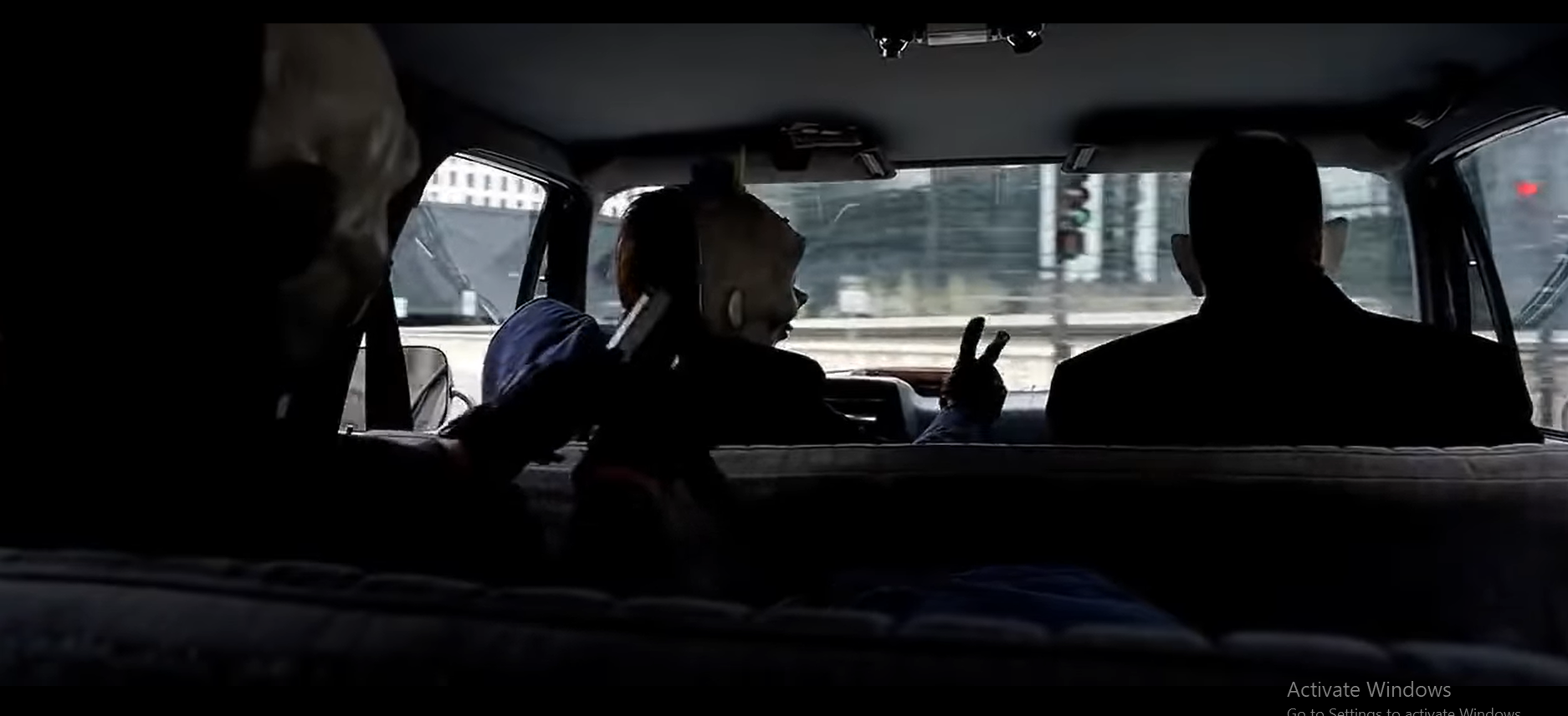
The sequence starts from a long shot of a man standing with his back against the camera and the camera pans on the mask that the man is holding, indicating how he’s really not what he seems and he’s supposedly is hiding behind the mask and he also puts it on when the car arrives, which shows how he’s hiding even from his own peers.
It cuts away to two more men, being in the shadows and not seen clearly, jumping off of a building.
The camera follows them, and it goes from medium, to long, to extra wide shot, indicating that whatever the men are doing is more important than who they really are.The first man, which we know is the main character because of the first scene opening with him and how he’s shown alone while the others are shown in pairs, is sitting in the backseat while two more men sits in the front.The first man is also shown more clearly, while visibly getting his gun ready, foreshadowing the near future to the audience.The pair of men on the building are shown again, while discussing the main character on how he wears makeup to scare people, giving the audience a hint as to what the mindset of our main character might be. The camera moves quite a bit, showing how the pair is nerved and how unstable things are in their work.
Action and Events
Then we move back to the car, with everyone exiting it and only our main character glancing around. The heist goes down, with the camera following everyone around. Cut away shots are used, showing us what is happening in the bank and at the rooftop. The movement of the camera is fast paced and so is the editing, showing chaos.The camera also shows only this character in the bank significantly, which already makes it clear to the audience that the character would be shown more briefly.
The heist starting
No significant figure being in focus
The next few scenes follow the same pattern, with the men killing each other after the work being done. The camera remains shaky through most of the scenes, and stables when it comes on the man who starts shooting the robbers. It indicates what he’s being calm and steady, and what he’s doing is right in his mind.
The whole sequence ends when all the men are dead except for one, the man who we saw at the start, and just before the sequence ends, he reveals himself to be the Joker.
lowkey – downstairs
lowkey – downstairs
lowkey – downstairs
highkey – upstairs
highkey – upstairs
highkey – upstairs
The lightening indicates the shift in the two places, with the bank being lit and having high-key lightening while the basement having low-key lightening, indicating the mood shift, but mostly high-key lightening is used which seems unusual and unsettling for a heist, because most heists take place in the dark, but here it completely makes sense because it sets up the story with being something unusual and not like most.
The Mise-en-scene are basic, with the bank being highly furnished and and the people in the bank being suited and dressed well while the robbers, although wearing suits, have a disoriented look about them, with their suits being not being pressed and their attire being a mess and most importantly their masks.
rule of third applied, in the 3/4 part of the frame
being in the centre
being in the centre
tight framing, feeling uneasy
The framing also gets congested and tight when on joker, while the rule of third mostly applies to Joker, and he is the one who is in the line of third mostly, while others are in the centre.
This, in my opinion, targetted the people who are young adults or adults, with the age ranging anywhere from 18-30. The genre can be shown via the suspense created from the framing to the quick and chasing sound.
Genre
The film portrays plenty genres such as Action, Thriller, Mystery, Crime Film and Drama
Even though not all of these genres collides with what my film opening have as a genre, it does have a common ground as thriller and mystery, which is why I decided to do the analysis of this film first. It portrays it’s genres clearly using different conventions.
Themes and Topics
The film itself may have many themes and topics, but the theme and topic which the film opening touched upon was mainly justice and corruption. The bad guys and our antagonist, which we see clearly as his motives comes in as an opposing force, are introduced in the first few minutes and we are given the idea that there must be someone opposed to the antagonist. The theme again, is touched as the Joker turns against his own people which at the end shows how no one can be trusted and just how corrupted is this world as compared to a fair world,.
Sound
The Non-diegetic and Diegetic sounds merge, with the sequence opening with an eerie music and then merging with the car’s. It shifts throughout the sequence, with music and all the background sounds. The significant change in the music we hear is when the Joker’s identity is revealed and that’s the climax where the build up ends up and sums up the whole sequence which is followed up by silence. The silence is for the audience to grasp what actually happened in the scene and that makes the audience concentrates on their thoughts and the visuals. Other than the music, all other sounds are non-diegetic like gunshots or dialogues.
Enigma Code
The question which makes the audience intrigued is how the antagonist will be stopped, what happens next and who stops him. All these questions are common but it simultaneously attracts the audience and since nothing is answered in the first few minutes, the audience are not left with many options except to watch the remaining movie to see how the story ends.
And all this concludes my first film opening analysis.
Since my task is to create a film opening and Mise-en-scène is an integral part of every frame in a film, I deem it necessary for me to know what Mise-en-scène is, and therefore, I am uploading this post, explaining Mise-en-scène, so that I know what the frames of my film opening should consist of.
Mise en scene is a French term meaning ‘everything in the frame.’ Elements that make up mise en scene include: • Setting and Location • Props • Costume • Performance and Movement
Performance and Movement. • This refers to the meanings conveyed by actors through their physical performance. Meaning can be conveyed through the following means: • Facial expression • Gaze • Gesture • Posture • Body Contact • Appearance • Spatial behaviour
Two main types of lightning are;
Low Key,
and High Key.
Low Key lightning is created by using only back and key lights, it produces sharp contrasts between lit and dark places, and it creates deep and distinct shadows and silhouettes.
Expressive lighting is predominately low key. • A key light is used with little or no fill to create high contrast and shadow to convey a dark expressive mood. • Subjects are sometimes back lit only to create a silhouetted figure. • Expressive lighting may also involve the use of single hue ‘gels’, filters and other optical effects to create a specific mood.
High Key lightning is natural and realistic to our eyes since it is bright and everything is clearly visible.
This involves the use of a key light (the main source of light), fill light and back lighting to create a natural look to the scene (this is called three point lighting). • Lighting can be adapted to suggest different times of day eliminate shadow and pick the subject out from the background
Three Point Lightening.
Three-point lighting is a traditional method for illuminating a subject in a scene with light sources from three distinct positions.The three types of lights are key light, fill light, and backlight
Three Point Lightening.
Colors have many connotations as well and are used to create different environments and give different meanings to objects, people or the frame in general. For e.g. green connotes nature, red can connote danger, threat or love, and blue creates a calm environment and is also used to represent freedom (color of the sky) and water etc.
Facial Expression and Body Language: they are used to clearly show how a person is feeling and when used together they can show the characters feelings, emotions and even the reason behind them. Body language can also indicate the relation between two people.
Costume, Hair and Make-up: They can immediately tell the audience about the occupation and financial status of the characters. They also show what time period the film is set in and they are also used to indicate the personality of the characters. Costumes can also be an identifying tool of certain characters, for e.g. the bat suit or a waistcoat and Sheriff’s badge for the Sheriff of a Wild West village.
Position of characters/objects in the frame: Positioning can draw attention to certain objects or characters; it can also show the importance of certain objects or characters. Furthermore, the positioning of two characters can show the relationship between them.
This sums up my general understanding of Mise-en-Scene and how it is used in Films.
The general meaning of editing can be as simple as Editing is the process of selecting and preparing writing, photography, visual, audible, and film media used to convey information. But that is not the only thing we need to know before analysing and using the editing skill in our film opening.
There are many effects and methods used in editing to make the final product look presentable with respect to it’s continuity.
A transition where one shot is instantly followed by another.
Continuity Editing
Visual editing where shots are cut together in a clear and linear flow of uninterrupted action. This type of cutting seeks to maintain a continuous sense of time and space.
Continuity Error
When the action or elements of a scene don’t match across shots. For example, when a character breaks a glass window but in a later shot the window is shown undamaged.
Cross Cutting
Technique used to give the illusion that two story lines of action are happening at the same time by rapidly cutting back and forth between them.
Cutaway
The interruption of a continuously filmed action with a shot that’s peripherally related to the principal action.
Dissolve
When the end of one shot overlaps the start of the next one to create a gradual scene transition.
Editing
The process of taking raw footage to select and combine shots to create a complete motion picture.
Establishing Shot
A shot that gives viewers an idea of where the scene is taking place. These usually involve a shot from a long distance, such as a bird’s eye view.
Eyeline Match
A technique based on the idea that viewers want to see what on-screen characters are seeing. For example, if a character is looking intently at an off-screen object, the following shot will be of that object.
Fade
A visual effect used to indicate a change in place and time. This involves a gradual brightening as a shot opens or a gradual darkening as the shot goes black or to another color. Sound also fades in and out to convey the change.
Iris
A wipe that takes the shape of a shrinking or growing circle, depending on if the scene is opening or ending. Rarely used today but very common during the silent era.
J Cuts
An editing technique that allows the audience to first hear audio from a shot, and then see it.
Jump Cut
An abrupt cut that creates a lack of continuity between shots by leaving out parts of the action.
L Cut
An editing changeover between one shot and another in film, where the visual and audio shift at different times. Also called a split edit.
Matched Cut
A cut joining two shots with matching compositional elements. This helps to establish strong continuity of action. One of the more notable examples of this technique is from a famous scene in “2001: A Space Odyssey.”
Montage
A sequence of shots assembled in juxtaposition of one another to create an emotional impact, condense a story, or convey an idea. A famous example is “Psycho’s” shower scene. WARNING: This scene contains graphic violent content and may be disturbing. hereView the scene .
Roll
Graphics or text that moves up or down the screen. This technique is typically used for credits by having text move from bottom to top.
Rough Cut
The first editing pass done for a film. (The former sentence is not entirely accurate as an Assembly Cut is the first editing pass done for a film, but it depends on how one defines editing, so I think this is o.k.). A rough cut receives further polishing and editing before making its way out to audiences.
Sequence Shot
A long take composed of one shot that extends for an entire scene or sequence. Usually requires complex camera movements and action.
Shot Reverse Shot
The alternating of over-the-shoulder-shots, usually used during a conversation between two characters.
Sweetening
The process of adding sound effects and music and/or enhancing the existing audio with effects.
Wipe
The transition from one shot to another with a visible pattern or element. No longer used in today’s films but very common in early cinema.
Another component is 180 Degree Rule:
In filmmaking, the 180-degree rule is a basic guideline regarding the on-screen spatial relationship between a character and another character or object within a scene. By keeping the camera on one side of an imaginary axis between two characters, the first character is always frame right of the second character.
And Rule of Thirds:
The rule of thirds is a concept in video and film production in which the frame is divided into into nine imaginary sections, as illustrated on the right. Points (or lines) of interest should occur at 1/3 or 2/3 of the way up (or across) the frame, rather than in the centre.
These are some of the main aspects and concepts of editing in media which helps the product come into it’s final form.




 Eesha Saeed's AS Media Blog